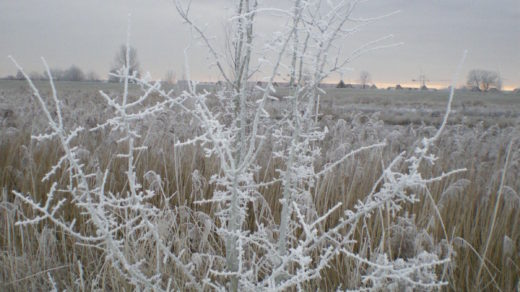
At Imbolc, winter is still very much with us outdoors. The soil may be frozen or soggy, and the hedgerows are bare, but beneath it all life is beginning to stir. Imbolc has a very different kind of magic to it. It’s about those first, hopeful signs of spring after winter’s long rest.
The hedge is still bare. The hawthorn, elder, blackthorn, and hazel are without their leaves, but if you look closely you might spot a bud forming on a branch, or some other small sign that things are waking up again.
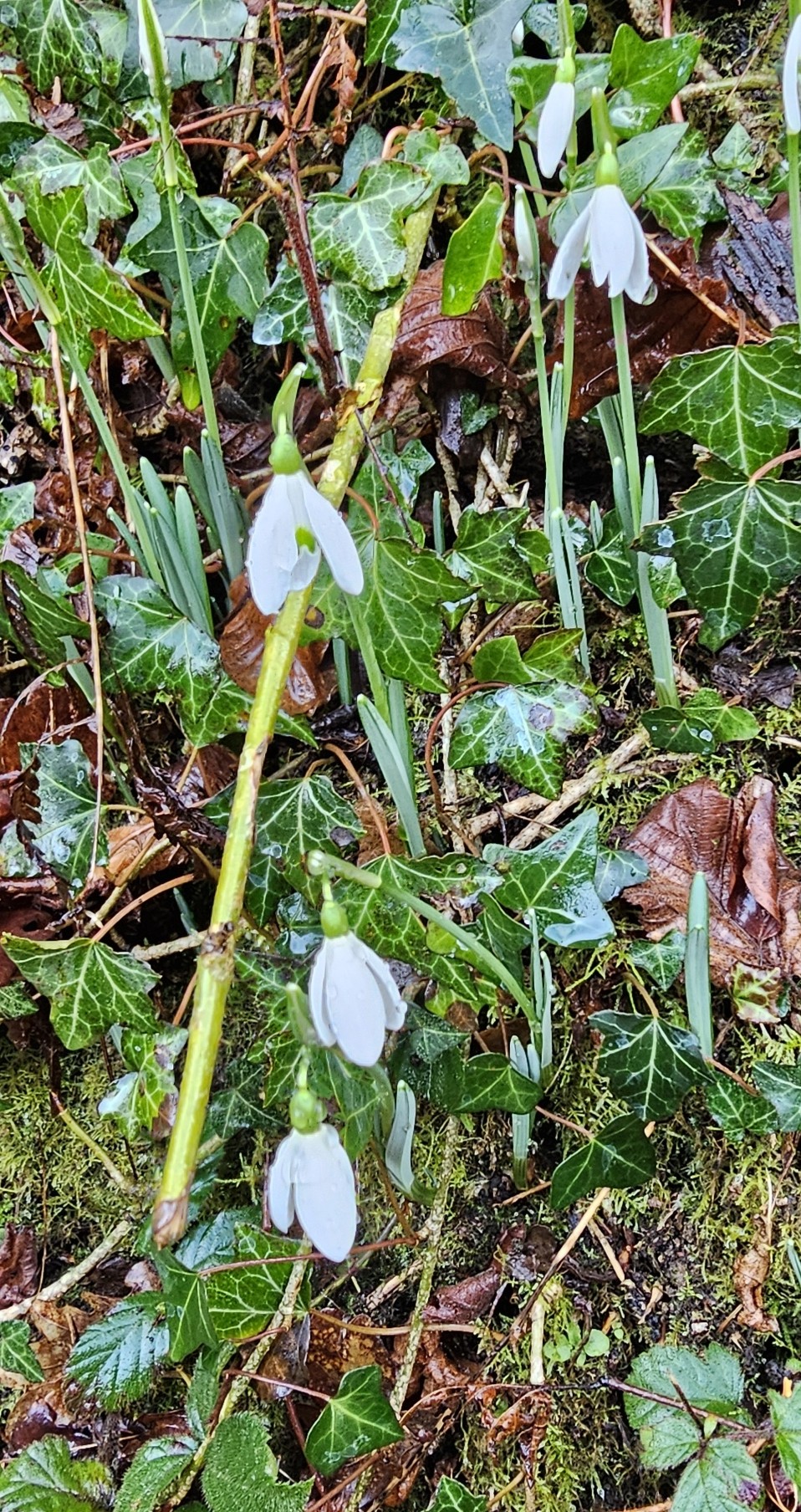
On the ground, though, life is easier to see. Here in the UK especially, snowdrops are everywhere at this time of year, popping up just in time for Imbolc. This fragile white flower blooms under the guardianship of Brigid. She is the goddess of the hearth fire, the forge, and creative inspiration, and she represents the returning light and the beginning of spring. The snowdrop, small and delicate, carries her presence beautifully. I think most of us feel a little lift of excitement when we spot the first snowdrops of the year. I’ll admit, I find it hard to pick them for my altar as I love seeing them exactly where they are, growing freely in the ground. Snowdrops are often found along boundaries, old paths, and hedgerows, those in-between spaces that Brigid herself watches over.
Snowdrops sometimes emerge through snow, their white petals speaking of purity, renewal, and strength. They may be small, but they are strong enough to push through frozen soil. That feels very much like Brigid to me. She is a gentle goddess. Her fire doesn’t scorch or overwhelm but it does warm, protect, and kindle a spark of creativity within us. Brigid’s connection to healing and renewal fits perfectly with the snowdrop. It blooms when the land still looks lifeless, reminding us that healing often starts long before we can see any real change happening.
The snowdrop is a living symbol of Brigid’s blessing: a promise that light will return, creativity will awaken, and the long winter will not last forever. In folk belief, the first snowdrops were often seen as sacred flowers, bringing hope and purity to the home.
I was really pleased to see snowdrops in my own garden this year. It’s a very large shaded space, surrounded by woodland, and the snowdrops are growing on a steep, vertical bank. Seeing those small white heads pushing out of the soil always feels like a small victory over this dull rainy winter.
When honouring Brigid at Imbolc, it’s worth remembering to treat snowdrops with care and respect. Never pull them roughly from the ground or damage the bulb. Leave them to bloom again next year. Where they grow naturally, I see them as deeply connected to the spirits of that place.
If you do want snowdrops for your altar, pick with care and never take too many from one spot. One or two is plenty to honour Brigid and mark the coming of spring. Or you can honour her where they grow, offer a prayer instead of removing them, and light a single white candle on your altar in their place. Sit with the flame and meditate on it. Brigid’s fire lives in making, healing, and tending. Take a little time to think about what you want to achieve creatively in the coming spring. You might like to weave a Brigid’s cross as part of your Imbolc practice. There are plenty of simple instructions online if you feel drawn to it.
Imbolc reminds us that we are standing at a threshold, where winter begins to loosen her grip and the first promise of spring appears.